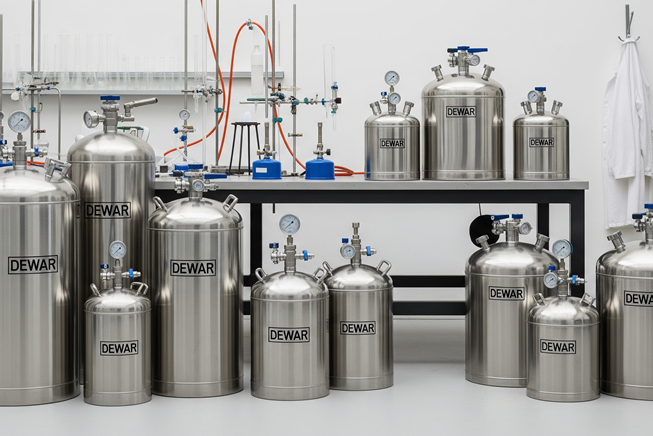
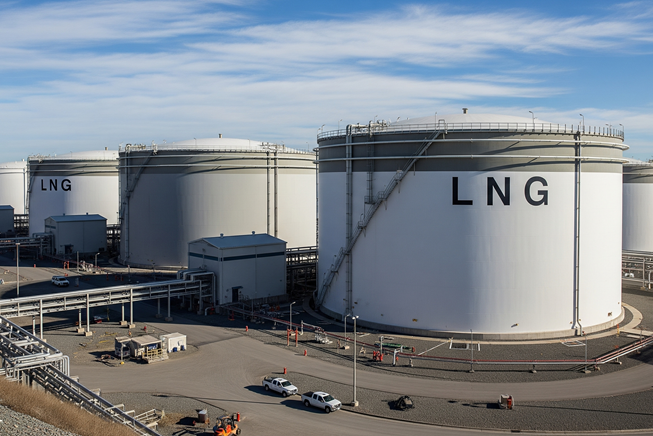
If the medical sector represents the most human face of cryogenic technology, the industrial sector is its economic engine and widest application area. Almost every branch of modern industry, from metal processing to electronics, chemical production to energy, relies on industrial gases (nitrogen, oxygen, argon, carbon dioxide, etc.) at some point in their operations. The safe and economic provision of these gases in large quantities is vital for the efficiency and continuity of production processes. This is where cryogenic storage tanks take on the role of the industrial backbone. The enormous volume advantage provided by storing gases in a liquid state allows factories and production facilities to keep the massive amount of gas they need on-site, continuously available. This is not just a logistical convenience but also a production strategy. Especially Liquefied Natural Gas (LNG), which has revolutionized the energy sector, and the applications of liquid argon and nitrogen, which are indispensable for high-tech production, clearly demonstrate the central role of cryogenic storage technology in industrial development.
The Future of the Energy Sector: Liquefied Natural Gas (LNG) Storage and Transportation
As the energy world undergoes a transition toward cleaner and more flexible sources, Liquefied Natural Gas (LNG) stands out as one of the key players in this transformation. When natural gas is cooled to −162
∘
C at atmospheric pressure, it turns into a colorless, odorless, and non-toxic liquid and is named LNG. The most striking result of this conversion is that the volume of the gas shrinks by approximately 600 times. This simple physical phenomenon has redrawn the global energy map. Traditionally, natural gas was a geographically limited energy source that could only be transported via massive pipelines. However, LNG technology has turned natural gas into a global commodity that can cross oceans and be transported on roads and railways. Cryogenic storage and transport tanks are at the center of this revolution. The entire logistical chain, from the insulated tanks of enormous LNG ships to the large storage facilities at power plants and the truck tankers transporting gas to industrial users, relies on these specialized tanks that can safely maintain LNG at −162
∘
C. The removal of impurities such as water, carbon dioxide, and heavier hydrocarbons from natural gas during the liquefaction process makes LNG a cleaner and higher-energy fuel than pipeline gas. With these features, LNG offers both a more efficient source for electricity generation plants and a greener alternative to diesel fuel for heavy-duty vehicles and ships. Consequently, cryogenic storage tanks are not merely a storage tool but a key technology that enables the transition to a cleaner energy future.
Metallurgy and Electronics: Liquid Argon (LAR) and Nitrogen (LIN) Applications
The sensitive and complex processes of high-tech manufacturing industries often require special atmospheric conditions. Cryogenically produced and stored gases play a critical role in providing these conditions. In the metallurgy sector, especially during the production, melting, and welding of high-quality metals such as steel, aluminum, and copper, the oxidation and quality reduction of the metal due to reaction with oxygen and moisture in the air is an undesirable situation. Liquid argon (LAR) is used to solve this problem. Argon is an extremely inert gas. Liquid argon drawn from cryogenic storage tanks is vaporized and directed to the welding or melting area, where it displaces the air, creating a protective atmosphere around the metal. This results in cleaner, stronger, and defect-free weld seams and higher-quality metal products. Similarly, the electronics industry is also heavily dependent on cryogenic gases, particularly liquid nitrogen (LIN). The production of semiconductors (chips) is carried out in extremely clean and controlled environments (clean rooms). Since nitrogen is an inert gas like argon, it is used to prevent unwanted chemical reactions during production processes. Furthermore, liquid nitrogen is used as a coolant during the testing of electronic components to prevent overheating and to evaluate their performance under different temperature conditions. These applications show that cryogenic storage tanks are not just for storing raw materials but are also an indispensable tool that directly affects quality and efficiency in the most sensitive production processes of modern industry.
Freshness and Quality in the Food Industry: Cryogenic Freezing and Cooling
The food industry is constantly seeking innovative technologies to maximize product quality, freshness, and shelf life. Cryogenic technologies, particularly in freezing and cooling processes, answer this quest by offering revolutionary advantages compared to traditional methods. Cryogenic freezing, using liquid nitrogen (LIN) (−196
∘
C) or liquid carbon dioxide (LCO2) (dry ice at −78.5
∘
C), allows food to be frozen in seconds or minutes. This extraordinary speed is the key to preserving food quality. During the slow freezing process that takes hours in traditional mechanical freezers, the water in the food cells freezes slowly, creating large, sharp ice crystals that rupture the cell membranes. When the food is thawed, water leaks from these ruptured cells, leading to a loss of the product’s texture, flavor, and nutritional value.
In cryogenic freezing, the temperature drops so rapidly that the water does not have time to form large crystals. Instead, microscopic ice crystals are formed inside and outside the cell, which do not damage the cell structure. Consequently, the thawed product is much closer to its pre-frozen freshness, texture, color, and flavor. This method forms the basis of Individually Quick Freezing (IQF) technology, especially for sensitive fruits like strawberries, seafood like shrimp, and high-quality meat products.
Quick Freezing (IQF) and Shelf Life Extension Techniques
Cryogenic cooling and freezing technology is used not only for freezing the final product but also for controlling temperature at various stages of the food processing chain. This increases production efficiency as well as product quality and food safety. For example, during the mixing, kneading, or grinding of foods like ground meat, sausage batter, or bakery products, the temperature rises due to mechanical friction. This temperature increase can both accelerate microbial growth and negatively affect the product’s texture and flavor. Systems like the CRYO INJECTOR CB3, developed by Air Liquide, offer an elegant solution to this problem. These systems inject a controlled amount of liquid nitrogen (LIN) or liquid carbon dioxide (LCO2) directly into the product during processing, through special nozzles mounted at the base of the mixer or grinder. This instantaneous cooling precisely maintains the process temperature at the desired level, slows down bacterial growth, preserves product freshness, and shortens mixing times, thereby increasing production capacity. Similarly, systems like the CRYO SNOW UNIT use liquid carbon dioxide to produce “dry ice snow” on-site, and this snow is sprayed over products that need cooling (e.g., chicken products in transport crates). These methods are fed by cryogenic storage tanks and enable the food industry to extend shelf life and maximize food safety without compromising product quality. This is the most concrete proof that cryogenic storage is not just a storage solution but also a quality enhancement technology.
Aerospace Industry: Rocket Fuel Storage
Humanity’s dream of reaching the depths of space fundamentally relies on a single engineering problem: generating the immense thrust required to escape the Earth’s gravity. Rocket science is the quest to find the most energy-efficient fuels and store them in the lightest possible way. The answer to this quest lies in cryogenic technology. The most powerful and efficient chemical fuel combination used in space rockets is liquid hydrogen (LH2) and liquid oxygen (LOX). Liquid oxygen (the oxidizer) enables the fuel to burn, while liquid hydrogen (the fuel) is the substance with the highest known specific impulse, meaning it produces the most thrust per unit mass. However, achieving this superior performance comes at a cost: these two elements can only remain in a liquid state at extremely low cryogenic temperatures. Liquid oxygen boils at −183
∘
C, and liquid hydrogen boils at −253
∘
C, a temperature very close to absolute zero. This means that launching a rocket is essentially managing a colossal flying cryogenic storage system. The rocket’s massive external fuel tanks are engineering marvels at the pinnacle of insulation and material science, safely storing these freezing liquids until the moment of launch and then pumping thousands of liters into the engines in seconds.
High Thrust with Liquid Hydrogen (LH2) and Liquid Oxygen (LOX)
One of the most important factors determining a rocket’s performance is the Tsiolkovsky rocket equation. This equation states that the final velocity a rocket can achieve depends on the exhaust velocity (specific impulse) of its fuel and the ratio of the rocket’s initial (full) mass to its final (empty) mass (mass ratio). The liquid hydrogen (LH2) and liquid oxygen (LOX) combination excels in both areas. LH2 has the highest energy content among chemical fuels and, therefore, the highest exhaust velocity. Since it is also the lightest element in the universe, the fuel itself is light. This improves the rocket’s overall mass ratio and allows it to carry more payload into orbit. Powerful launch systems such as Europe’s Ariane 5 rocket and NASA’s legendary Space Shuttle relied on massive cryogenic fuel tanks to achieve this performance. For example, the Space Shuttle’s iconic orange external fuel tank actually consisted of two separate inner tanks: a smaller tank carrying about 630,000 kg of LOX at the top, and a much larger tank carrying about 106,000 kg of LH2 at the bottom. The fact that the majority of the tank was dedicated to hydrogen is due to the liquid’s very low density. While forming the structural backbone of the rocket, these massive tanks also had to protect the extremely cold liquids inside from the tropical temperatures at the launchpad and the aerodynamic heating during atmospheric ascent. This represents the most extreme and demanding application of cryogenic storage tanks and is both a source of inspiration and an engineering peak to be reached for firms like Cryotanx.
Hazards of Cryogenic Liquids and Safety Precautions
As indispensable as cryogenic storage tanks and the liquids they contain are for modern industry and medicine, they can be equally dangerous if not managed correctly. The immense benefits of this technology bring with them serious responsibilities. At Cryotanx, we adopt safety not as a product feature but as a culture. This culture begins with transparently understanding the risks and taking the most effective precautions against them. The main dangers of cryogenic liquids stem from their most obvious characteristics: their extremely low temperatures and their massive expansion ratio when they change from liquid to gas. These two characteristics pose serious risks, such as cold burns, asphyxiation, explosion due to overpressure, and material damage if correct procedures and protective equipment are not used. Therefore, it is vital that all personnel working with cryogenic systems are aware of these dangers and take all necessary safety measures. Safety is not ensured only by a well-designed tank; it is a holistic approach that includes proper training, correct operating procedures, and preparedness for emergencies.
Cold Burns, Tissue Damage, and Necessary First Aid
The most obvious and immediate danger of cryogenic liquids is their extreme coldness. Direct contact of a liquid like liquid nitrogen (−196
∘
C) or liquid oxygen (−183
∘
C) or the extremely cold gases vaporizing from them with the skin or eyes causes severe tissue damage known as a “cold burn” or “frostbite.” This situation is as dangerous as a thermal burn from touching a hot object. At the moment of contact, the water in the skin and underlying tissues instantly freezes, cell membranes rupture, and blood circulation stops. This results in tissue death. The skin may turn gray or white and may blister. Correct first aid intervention is critical in such an exposure situation.
The following should be done:
- Contaminated clothing should be removed immediately.
- The affected area should be washed with plenty of lukewarm water (never hot water) for at least 15 minutes to gently restore blood circulation.
- The frozen area should never be rubbed or massaged, as this can cause further damage to the frozen tissues.
- If there is severe tissue freezing or blistering of the skin, the patient should be taken to the nearest healthcare facility immediately. Preventing such accidents relies on the use of the correct Personal Protective Equipment (PPE).
Risk of Asphyxiation and Ventilation in Confined Spaces
Perhaps the most insidious danger of cryogenic liquids is the risk of asphyxiation. Except for oxygen, cryogenic gases like nitrogen and argon are non-toxic, but when they leak into a confined or poorly ventilated area, they displace the oxygen in the air. Since these gases are colorless and odorless, a dangerous drop in the oxygen level in the environment (below 19.5%) may go unnoticed. This situation becomes even more dangerous due to the massive expansion of the liquids as they turn into gas. For example, the vaporization of just one liter of liquid nitrogen produces approximately 700 liters of nitrogen gas. Even a small leak can rapidly reduce the oxygen concentration in a confined room to levels that can cause asphyxiation. Therefore, excellent ventilation is an absolute necessity in areas where cryogenic storage tanks and these liquids are used. Before entering such areas, especially if a leak is suspected, the oxygen level in the environment must be measured with a portable gas detector. A cryogenic liquid vessel should never be transported in a closed vehicle such as a car or van, as even a small leak could be fatal to the driver or passengers.
Risks of Overpressure and Material Embrittlement
Every cryogenic storage tank combats a continuous physical process within it: heat leakage. No matter how perfectly insulated, some heat inevitably leaks into the tank from the outside environment. This heat causes the liquid to vaporize slowly but continuously. This vaporization leads to a constant increase in pressure (self-pressurization) inside the tank, which is a closed vessel. If this pressure is not vented in a controlled manner by systems like safety valves, it can exceed the tank’s design pressure, causing it to explode catastrophically. Therefore, regularly monitoring the tank’s pressure gauges and ensuring that the safety systems are working is vitally important. Another significant risk is material embrittlement. As previously mentioned, incorrect material selection can cause the material to fracture suddenly at cryogenic temperatures, leading to a loss of the tank’s integrity. This risk applies not only to the tank itself but also to other structures where cryogenic liquids might spill. For example, contact of an LNG leak with an ordinary steel ship deck can cause the deck to instantly become brittle and fracture. The management of these risks is possible through correct engineering, correct material selection, and compliance with strict standards.
Personal Protective Equipment (PPE) Requirements
Ensuring the safety of personnel when working with cryogenic liquids begins with the correct selection and use of Personal Protective Equipment (PPE). This equipment is specially designed to protect workers from cold burns, liquid splashes, and other potential hazards.
Standard industrial safety equipment is insufficient and even dangerous for these conditions. The basic PPE that must be used when working in cryogenic environments includes:
- Eye and Face Protection: It is essential to use a full face shield over chemical goggles to provide complete protection against liquid splashes. Standard safety glasses alone are not sufficient.
- Cryogenic Gloves: These gloves are made from special materials to provide insulation against extreme cold. They should be loose-fitting to prevent liquid from pooling inside the glove in case of a splash and to allow for rapid removal. It should be remembered that these gloves are not designed for immersion in liquid. Oily or greasy gloves should never be used, especially when working with liquid oxygen, as this creates a fire hazard.
- Protective Clothing: Coveralls or laboratory coats with long sleeves, no pockets, and no cuffs should be worn to protect the skin from splashes. Pant legs should always be draped outside the boots or shoes to prevent liquid from running inside the footwear.
- Footwear: Closed and sturdy safety shoes should be worn. The use of this PPE is mandatory in all procedures involving the handling of cryogenic liquids (filling, emptying, sampling, etc.) and forms the foundation of a safe working environment.
| Type of Hazard |
Potential Consequence |
Preventive Measures (Engineering and Administrative) |
Required Personal Protective Equipment (PPE) |
Emergency / First Aid |
| Cold Burn / Frostbite |
Severe tissue damage, cell death, amputation. |
Use splash guards, safe operating procedures, personnel training. |
Cryogenic gloves, full face shield, long-sleeved clothing, pants draped outside footwear. |
Wash the affected area with lukewarm water (not hot), do not rub, seek medical attention. |
| Asphyxiation (Excluding Oxygen) |
Loss of consciousness, death due to oxygen deficiency. |
Work in well-ventilated areas, measure oxygen level before entering confined spaces, leak detectors. |
Self-Contained Breathing Apparatus (SCBA) if required (emergency, rescue). |
Immediately move the victim to fresh air, perform artificial respiration, call emergency medical help. |
| Overpressure |
Violent explosion of the tank or closed system, shrapnel effect. |
Engineering controls like pressure relief valves, rupture discs, regular pressure monitoring, never trap liquid in closed sections. |
Standard occupational safety equipment (helmet, goggles, safety shoes). |
Evacuate the area immediately, notify authorities. |
| Material Embrittlement |
Sudden fracture and loss of integrity of the tank or equipment, leakage. |
Correct material selection in design (austenitic stainless steel, etc.), protection against spills. |
Standard occupational safety equipment. |
Evacuate the area in case of leakage, follow emergency procedures. |
| Oxygen Enrichment (LOX Leak) |
Increased fire risk, materials that are normally non-flammable become combustible. |
Keep away from oil, grease, and other flammable materials, prevent ignition sources, create non-smoking areas. |
Oil-free gloves and clothing. |
Cut off the oxygen source, use appropriate fire extinguisher (DCP), cool the tank with water. |
** **