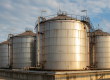
International Standards for Fixed Roof and Floating Roof Tanks
The following table summarizes the most commonly referenced standards for large, welded steel tanks used for petroleum, petrochemicals, and other industrial liquids.
Important Notes and Additional Information:
- Such as:
- Most Common Use: Globally, API 650 for the design and fabrication of new tanks and API 653 for the maintenance and inspection of existing tanks form the foundation of the industry.
- Design vs. Safety Distinction: Standards like API 650 specify how the tank is to be built, while standards like NFPA 30 determine how that tank is to be safely located in a facility and how fire risks are to be managed. These standards are often used together.
- Regional Differences: Depending on a project’s location, local and national regulations (e.g., in Turkey, TSE standards and relevant ministry regulations) may be mandatory in addition to or in place of these international standards.
- Standard by Tank Type: This table focuses on atmospheric or low-pressure storage tanks. For vessels operating under high pressure (pressure vessels), different standards such as ASME Section VIII are used.
Details About Fixed Roof and Floating Roof Tanks
Fixed Roof / Floating Roof Tanks represent the most fundamental design difference and engineering choice for large-volume atmospheric storage tanks, especially those built within the framework of the API 650 Storage Tanks standard. This choice depends on a series of critical factors, from the physical and chemical properties of the product to be stored, to operational efficiency goals, environmental regulations, and the project’s initial investment cost. On one hand, there are fixed roof tanks with their structural simplicity and lower initial cost; on the other, floating roof tanks with their superior technology in minimizing evaporation losses and environmental emissions. Making the right choice between these two basic philosophies is vital for the long-term success of the project. Companies with a broad engineering vision, such as Cryotanx, offer deep expertise in the design and construction of both roof types, providing their customers not just with a tank, but with an optimized storage solution best suited to their specific needs. Therefore, the decision process between Fixed Roof / Floating Roof Tanks requires an engineering and investment partnership.
Design Philosophy and Application Areas of Fixed Roof Tanks
Fixed roof tanks, as the name suggests, are storage tanks that have a structural roof fixed onto the cylindrical shell of the tank. This roof type is the most traditional and structurally simplest form of atmospheric storage tanks. The design philosophy is primarily based on protecting the tank’s interior from external elements such as rain, snow, and dust, and ensuring structural integrity. This approach offers an economic advantage, especially for projects aiming to keep the initial investment cost (CAPEX) low.
Fixed roofs are fundamentally divided into two types: conical roofs and dome roofs. A conical roof (Cone Roof) is typically in the shape of a slightly sloped cone, supported by a series of columns in the center or distributed within the tank. Its construction is relatively simple and its cost is low. A dome roof (Dome Roof), however, is a more modern design with a spherical geometry that can be self-supporting without the need for any internal supports. The absence of internal columns provides advantages such as protecting the purity of the product inside the tank and facilitating the use of some operational equipment (like agitators), and it is generally preferred for larger-diameter tanks. Cryotanx determines the most suitable structural solution for the project’s requirements by offering these different conical roof, dome roof options to its customers.
However, the biggest disadvantage and engineering challenge of fixed roof tanks is the “vapor space” formed between the liquid surface and the roof. The stored liquid saturates the air in this space with its own vapor. This situation leads to product loss and environmental emissions through two main mechanisms: “Breathing Losses” and “Working Losses.” Breathing losses are caused by daily temperature changes. During the day, the vapor space inside the tank heats up due to the sun, expands, and is expelled through the breather valve on the tank. At night, as the tank cools, fresh air is drawn in; this air is quickly saturated by the liquid and becomes ready to be expelled again the next day. This continuous breathing cycle causes significant product loss. Working losses, on the other hand, occur during the filling of the tank. The liquid entering the tank displaces the vapor-saturated air, pushing it out.
For these reasons, the use of fixed roof tanks is directly related to the volatility (vapor pressure) of the stored product. These tanks are an ideal and economical solution for storing products with very low or almost no evaporation tendency, such as water, heavy fuel-oil, bitumen, and molasses. They can also be preferred for less valuable products where evaporation losses do not pose an economic or environmental problem. For the safe operation of a fixed roof tank, it is mandatory to have pressure-vacuum relief valves (PVRV) of the correct capacity to balance these pressure changes.
Technology and Advantages of Floating Roof Tanks
Floating roof tanks are a technological and innovative solution to the evaporation loss and emission problems of fixed roof tanks. The fundamental operating principle of these tanks is to almost completely eliminate the vapor space inside the tank. They achieve this by designing a roof that floats directly on the surface of the stored liquid and contacts the tank wall with special sealing elements (seals). As the liquid level changes during filling or emptying, the floating roof moves vertically with it. In this way, no space remains between the liquid and the atmosphere where vapor can accumulate. This simple yet effective principle can reduce evaporation losses and volatile organic compound (VOC) emissions by up to 98%.
This means both an enormous economic gain, preventing millions of dollars in product loss, and a critical environmental benefit that protects air quality. Floating roof tanks are primarily divided into two main categories: External Floating Roof (EFR) and Internal Floating Roof (IFR). In EFR systems, there is a roof floating inside a tank that is completely open at the top. These roofs must have special drainage systems to evacuate rainwater and snow and are directly exposed to weather conditions. IFR systems, on the other hand, are a hybrid solution where a floating roof is additionally installed inside a fixed roof tank. This “dual roof” approach provides the highest level of protection.
The fixed roof protects the system from external elements like rain, snow, and wind, while the internal floating roof prevents evaporation. IFR-equipped Fixed Roof / Floating Roof Tanks have become the industry standard today for storing valuable and volatile products such as crude oil, gasoline, jet fuel, and naphtha. The performance of a floating roof tank largely depends on the quality of the seal system between the roof edge and the tank shell. These systems must provide continuous and reliable contact to prevent vapor leakage while maintaining flexibility during the roof’s movement. Different sealing technologies are available, such as mechanical shoe seals, liquid-filled seals, or foam-filled seals.
Generally, a secondary seal is used above the primary seal to capture any potential leaks. The design and installation of these complex systems require the engineering capability of firms specialized in this field, like Cryotanx. In conclusion, although the initial investment in a floating roof tank is higher than in a fixed roof tank, this additional cost usually amortizes itself within a few years, thanks to the value of the recovered product and the avoidance of potential environmental penalties. Therefore, these tanks are not just storage equipment, but also a smart economic and environmental investment.
Fixed Roof / Floating Roof Tanks
Choosing between Fixed Roof / Floating Roof Tanks is one of a project’s most strategic engineering decisions. This decision requires a multi-factorial analysis that goes beyond a simple cost comparison. There is no single correct answer to the question, “Which roof type is better?”; instead, one must focus on the question, “Which roof type is most correct for my application?” In this decision-making process, the consultancy of an engineering firm or an experienced manufacturer like Cryotanx is critically important.
The first step in this analysis is to understand the product to be stored. What is the product’s Reid Vapor Pressure (RVP)? How volatile is it? What is its value? For example, while building a floating roof tank to store water would be an unnecessary cost, storing crude oil in a vented fixed roof tank would be both a financial loss and a serious environmental violation. The second step is to examine the environmental regulations in the project’s location. Many countries and regions have strict limitations on the release of volatile organic compounds (VOCs) into the atmosphere. These regulations may legally mandate the use of floating roof tanks for products above a certain vapor pressure. The third step is to conduct a detailed economic analysis.
The amount of annual evaporation loss from a fixed roof tank is calculated, this amount is multiplied by the product’s market value to find the annual economic loss. Then, the additional investment cost (CAPEX difference) of a floating roof tank is calculated. The feasibility of the investment is evaluated by calculating how long it will take for the annual economic gain to pay back this additional investment cost (payback period). Cryotanx assists its customers in making the most accurate investment decision by performing such techno-economic analyses for them. Operational factors are also influential in the decision-making process. How often will the tank be filled and emptied (tank turnover rate)? A high turnover rate increases working losses, making floating roof tanks more attractive.
The climate of the project’s location is also important. In a region with heavy snowfall, the structural design of an external floating roof (EFR) must be made to withstand this snow load. When all these factors are brought together, the most suitable solution for the project emerges. The fabrication and erection processes for a Fixed Roof / Floating Roof Tanks project also differ. While both tank types are field-erected according to standards like API 650, the roof assembly requires different techniques. The fixed roof is usually installed at the very top after the tank shell is completed. The floating roof, on the other hand, is usually built on the ground inside the tank after the tank bottom is completed. Then, during the filling of the tank with water for its hydrostatic test, this massive roof is floated on the water, raised up, and all systems are tested.
In conclusion, the choice between Fixed Roof / Floating Roof Tanks is a perfect example of purpose-driven engineering. Both technologies have their own unique advantages and application areas. Companies with high engineering and manufacturing capabilities, like Cryotanx, have the power to combine these two worlds to offer the most suitable, safest, and most efficient storage solution for each customer’s unique needs.